Wednesday, August 31, 2011

Professional Profile: Scott Benson

compiled by Eden Zang


1. Name: Scott Benson

2. Job Title: Diver/Marine Biologist, Maui Ocean Center

3. Degree(s) held and from where.
    AA, Chabot College, Biology
    BA University of California, Santa Barbara, Aquatic Biology

4. Brief description of your job.
 Animal Husbandry for aquarium exhibits including marine fish and invertebrate acquisitions, collections, returns of animal to ocean, feeding, diets, population dynamics, disease treatments, exhibit maintenance, water flow dynamics, offshore pipe maintenance, equipment maintenance, "Shark Dive Maui" Dive Master.

5. Briefly describe the project(s) you are currently working on.

Acquisition of marine animals to permits issued by DLNR. Continuous improvements to existing exhibits, maintaining effluent water sampling techniques, improvements to fish and invertebrate diversity, release of 5 green sea turtles and entry of 6 new baby green sea turtles.

6. Explain how/why your job is important to society.
Public education for the marine sciences and husbandry. To understand the link of the Hawaiian culture, tradition, spiritual and balance (pono) the Hawaiian culture has had and still have with the oceans.

7. How did you end up doing what you’re doing?

Briefly, I was hired immediately out of school to be employed as an associate Marine Biologist with a consulting firm in Santa Barbara. We were contracted to do marine biological/oceanographic research for a nuclear power plant (Diablo Canyon baseline study), US wide drilling fluid discharge studies, coastal municipality waste water effluent studies. Oregon State marine science center Newport, cetacean research, northwest coastal informative center liaison for dissemination of current academic research to government, academic and private industries.


8. Were you inspired by anyone in particular? If so, who, and how did he/she influence your career choice?
When I was in 7th grade, I decided I wanted to be a marine biologist. I began diving at age 15. My father introduced me to Jacques Cousteau in 1971 as a Senior in High School at a Chancellor Change ceremony at U.C. Berkley. That was my catalyst. I had a mentor, Robert Meek, PhD. who guided me along this journey. My parents were responsible for creating the environment for me to excel in my dream!

9. What is the most rewarding aspect of your job?

Wow! The care and respect of our ocean creatures. To help people who don't fully understand, approach some understanding of just how fragile our planet is, covered by 3/4 oceans. To see the joy and amazement of their witness to such an incredible marine world. To work with so many dedicated individuals within our organization and external groups.

10. If you could change one aspect of your job, what would it be?

Increase public awareness of the depletion of ocean resources, sharks, dolphins, whales for consumption and trophy. We need to educate our young to step up and assume responsibility for education and ownership of our oceans for its protection period. We need to have legislation supporting these young care takers in their endeavors.

11. Describe the most fun and exciting experience you have had during your career.

More than one can imagine! I guess untangling an adult female grey whale from entangled line from a suspended 500lb crab pot off the coast of Newport, Oregon. I freed her after some effort and she was on her way north and caught up with her pod. Determine offshore drilling fluid discharge rate was acceptable concerning environmental impact. Knowing information I provided through the Northwest Coastal Information Center helped the entities I provided new research findings. So much more over a lifetime of experience.

12. Describe the most disappointing or frustrating experience you have had during your career.

I don't care how many degrees one has, but common sense takes precedence! Offshore experience with the activities associated during operations is critical. I told a PhD group of scientists that a diver buddy of mine was in danger. They did not listen. He almost lost his life. Human mistake took the life of two buddies in the North Sea. I almost lost my life 4 separate activities offshore. Do not ever take mother ocean for granted.

13. What do you like to do on your days off?
Play. I mean we are surrounded by so much adventure, hiking, diving, exploring, Hawaiian culture, traveling to visit family and friends, entertaining, movies, sitting at home reading fiction/fact, cooking, watching science channels of TV, listening to classic rock and classical music.

14. What advice would you give to a student who is thinking about pursuing a career similar to yours?
Develop a passion! If one has a passion, the rest will come. A young person will gather momentum from parents, siblings and friends. Get a sincere and dedicated education. The marine sciences cycles. We as the world is finally figuring out the oceans are very critical to our existence. Grab on to it and help pass the torch.

15. Can you recommend any particular educational programs/internships, etc. that will help students prepare for a career like yours?
Investigate all opportunities. Create a viable resume of your passion and pursue that entity fitting your interests. Do not take "no" as their first response. Be aggressive and go after what you want. As far as educational programs, obtain curriculum of any state or university that will accredit internship to your academic overall class credit program. Get involved with any activity pertaining to your major. Diving collections, offshore work, lab employment. Enthusiasm will take one a long way. Keep a mental picture of you goals strive to be the best at what you do. You may not be a millionaire but your heart and mind will be true!
Some advice from a person who has enjoyed a wonderful life experience sharing and protecting our oceans.
- Scott Benson
Scott with Eden Zang at the Maui Ocean Center's sea turtle release event on Ka'anapali Beach, August 2011

Sunday, August 28, 2011

Check out the seat pocket in front of you next time you fly

by Emily Kelly

On my recent trip to Oahu for a Hawaii Coral Reef Initiative meeting, I picked up the Hawaiian Airlines magazine for some light reading. To my delight, there was a great article on the Reef Environmental Education Foundation (REEF), featuring Liz Foote! REEF is "a grass-roots organization that seeks to conserve marine ecosystems by educating, enlisting and enabling divers and other marine enthusiasts to become active ocean stewards and citizen scientists." Regarding collecting data on Maui's reefs, the magazine quoted Liz as saying, "You don't need a PhD to make important observations and contribute relevant data." TOTALLY! Thanks for the in-flight inspiration, Liz, and let's all get out there and participate!

Tuesday, August 16, 2011

Professional Profile: Pauline Fiene

By Eden Zang

Project S.E.A.-Link, a nonprofit organization based on Maui, has approached several individuals who are dedicated to marine science, education, conservation and sustainable tourism to share their experiences with students and the general community as part of its Professional Profiles project for this site.


The first professional we profiled is Pauline Fiene, a divemaster at Mike Severns Diving and biologist on Maui. She guides other divers and helps them to learn about and appreciate the underwater environment and the lives of the animals that they see. As a biologist she also makes observations and studies marine subjects both while leading dives and during dives that she makes on her own.

One of her main interests is studying subjects over a long period of time in their natural habitat. Along with Cory Pittman, she has studied Hawaiian opisthobranchs for over 20 years.

Phyllidia varicosa, photo by Pauline Fiene
 

One particular project she is most known for is the study of the spawning pattern of two species of corals which spawn mainly in the spring. Opportunities for observation are limited to a few times each year and because of that, it has taken many years to learn their spawning patterns.

She is also passionate about learning about individual animals' lives. Being in the water and working with crew who care and share their observations, allows learning about an animal's life history or behavior in the wild as no other method can. For example, long-term observations of a triton's trumpet with its eggs over a six-week period and of a sponge with five resident nudibranchs for over four years are recent examples of such long-term study.

Pauline is obviously passionate about her career. Pauline states, "Sharing knowledge and the underwater experience with other people opens their eyes to things they might not ever have known without your influence. That's important to that individual, but you just don't know what larger influence that may have." When asked if Pauline could change anything about her job she simply stated "sea conditions." Wouldn't that be great?

So would you like a career like Pauline's? Fiene states, "It's all about the passion. If you have that you will find your path. If you have a passion for something, you don't wait for a grant. You begin to do it on your own time if that's what it takes. If being outdoors is a critical element when you think about what you want to do for a living, this is ideal, because it's both physical and it stimulates your mind. I can't think of anything more rewarding than working outdoors with animals and combining that with intellectual pursuits."


If you'd like to find out more about Pauline Fiene, please visit the following links:
If you have questions for Pauline, please contact us and we will relay your question.

Interested in being profiled or know someone who might? Contact us! 

Monday, July 25, 2011

Kaanapali Makai Watch Coordinator Luna Kekoa's Report on the KHFMA Birthday Bash

by Luna Kekoa

On a sun shining , windy July 23rd, the Kahekili Herbivore Fisheries Management area celebrated its second year of existence with a Birthday Bash!  This event was hosted by the Kaanapali Makai Watch team, as well as the NOAA Humpack Whale Sanctuary and Marine Mammal Stranding team, and the West Maui Watershed partnership. 

Honorary guests to the KHFMA celebration included our Maui County Council members Mike Victorino, Joe Pontanilla, and Elle Cochran who shared their perspectives and concerns of the area with community members and volunteers.
 

As part of the celebration the community was encouraged to participate with an underwater scavenger hunt, and for those who couldn’t get wet, there was also a land-based scavenger hunt.  One group of volunteers participated in a Fish Identification Network (FIN) fish count survey,  while another group conducted water quality samples.  On land, beach-goer surveys and herbivore identification surveys were being conducted with park visitors and hotel guests.  Once the surveys were completed the group gathered around for some cake.  This year, researchers conducting experiments in the Kahekili area created KHFMA theme cakes that included a manini(convict tang) cake, a coral cake (with healthy and unhealthy reef), and urchin cupcakes. 


We would like to mahalo all participants who visited and shared in the KHFMA Birthday Bash!

Sunday, July 24, 2011

Kahekili, a "Hope Spot" for Hawaii, celebrates its 2nd birthday!

by Coral Rick

Early on a Saturday morning a Medieval village of tents began to grow on the shore of North Ka`anapali.  Slowly the tents were erected one by one by a small clan of Menehunue (disguised as Makai Watch) so that government and NGO folks could set up their exhibits. The posters were hung, the colorful pamphlets were laid out on the tables, and the freshly prepared foods were arranged in a tempting spread. And the pilgrims arrived from far and wide with flippers and snorkels and BCDS and wetsuits and heavy cans of air. And they brought their children - the future scientists and leaders. They came for many reasons: some to enjoy the sun and surf; others to count fish; and all came to celebrate the second anniversary of a marine protected area called the Kahekili Herbivore Fisheries Management Area.

Armed only with underwater slates and cameras, a dozen snorkelers slipped into the ocean further up the beach, allowing the constant wind to help them drift South and back to the village of tents.  Then smaller groups of divers turned on the valves of their air tanks and kicked slowly offshore before drifting down to the reef below. All were greeted by hungry schools of fish – herbivores – parrotfish and surgeonfish chomping away and keeping the coral reef from being overwhelmed by the algae.  In a soundless exchange of solidarity, a dozen divers waved and gave the “okay” sign to a dozen snorkelers patrolling from the surface.  They had come to see the abundance of marine life and they found biodiversity.  Scattered across the bottom of the reef were the experiments of scientists in big metal cages (under permit, of course) studying the role of urchins in the health of the coral reef ecosystem.

Back on shore, with gear cleaned up and packed away, they feasted and posed for photographs. Of course there was a Kahekili birthday cake.  And, of course there was the traditional group photo with everyone wearing funny little birthday hats.  Sylvia Earle has a dream of “hope spots” – places that are critical to the health of the ocean.  Kahekili is a “hope spot” in the main Hawaiian Islands because it was doomed to become another reef collapse.  But, thanks to the work of scientists, government, community and volunteers, there is hope.


P.S.  Two more exciting fish counts are being planned for August and September, so follow us on Facebook

To see more photos from the event, visit the Ka'anapali Makai Watch page on facebook!


Friday, July 22, 2011

Update from Hawaii Coastal Zone Management & NOAA on the West Maui Watershed Collaborative Planning Project

At the Coastal Zone 2011 (CZ11) Conference in Chicago on July 20, 2011, a special session was held on the US Coral Reef Task Force priority partnership initiatives called “Managing Coral Reefs from Ridge to Reef – Working in Partnership across Federal and State Agencies and Non-governmental Organizations to Address Local Needs.”  The two priority partnerships are West Maui Watershed/ Kaanapali Hawaii Coral Reef Strategy Priority Site for the Pacific and Guanica Bay, Puerto Rico for the Caribbean.
Visit this link to see the presentation given at CZ11 for West Maui which provides a good update and overview of the actions and strategy for collaboration.

Saturday, June 25, 2011

DOCARE's Observation & Incident Reporting workshop for Makai Watch

by Luna Kekoa 

On June 23rd the Kaanapali Makai Watch hosted a DOCARE community training at the Kaunoa Center in Lahaina, Maui.  This was the first, in a statewide series, of community meetings to inform the public, community, and Makai Watch volunteers, as to the role of DOCARE in the Makai Watch program.  This was also an opportunity for DOCARE and the community to interact and express concerns about the reporting process and follow up from DOCARE.   

With more than 30 in attendance the meeting brought both rookie and veteran Makai Watch volunteers from West, Central, and South Maui.  There were 8 DOCARE officers that participated in the meeting including the head of DOCARE Randy Awo.  Brooks Tamaye and Matt Yamamoto took the lead for DOCARE and led the audience through a presentation that explained the roles and responsibilities of DOCARE officers.  The presentation included the reporting process for violations and the follow up that occurs with DOCARE.    

Next, the community participated in an exercise consisting of examining pictures to point out both violations and common mistakes with reporting violations, such as not understanding gear restrictions or site specific regulations.  DOCARE ended the evening with displaying confiscated gear that were illegal to allow the community the ability to examine and see first hand what “illegal” fishing gear looks like.


The next step for the Kaanapali Makai Watch is to hold a site specific community meeting to discuss specific site regulations of the Kahekili Herbivore Fisheries Management Area. The meeting is being planned for early October. The statewide series of meetings has completed the second community meeting in Waikiki, Oahu.  There will be more meetings being held on neighboring islands coming soon as well!
To see more photos from the event, check out the facebook album!

Thursday, June 16, 2011

A Fisherman's Perspective

by Eden Zang

“Fishermen are conservationists. We want management. Status quo is killing our reef.” - Darrell Tanaka

Darrell Tanaka, local fisherman and the organizer of Roi Roundup, spoke Thursday, June 9th at the Hawaiian Islands Humpback Whale National Marine Sanctuary’s volunteer meeting. Tanaka spoke about the origins of the Roi Roundup, an “invasive species spearfishing tournament,” and why continued efforts are imperative. The roi roundup started as a fundraising effort and has morphed into a conservation movement. It brings together fishermen, local government and scientists to address the impact of roi on our local marine ecosystem and to address our ailing resources. Roi, or the peacock grouper, is an alien species introduced in the 1950’s to Hawaiian waters. Darrell made reference to research by University of Hawaii researcher Dr. Jan Dierking, which demonstrates that roi consume local reef fish, finding that a single roi can consume approximately 146 reef fish a year. Multiply that by the hundreds of thousands of roi currently in our waters and it may represent a significant threat to our fisheries. In addition, they can potentially outcompete our local fish for the food they would normally eat.

Tanaka made it clear that he was sharing his own opinions in his presentation, and has a degree in marine biology in addition to being a life-long fisherman. Tanaka made quite clear he fishes not for sport, but to put food on the table. He explained that fish is a resource and not a commodity for him. The difference? A commodity is something you can sell or trade. A resource is something that has great value and is kept for yourself or given to someone extremely important to you.

Tanaka spoke from a fisherman’s point of view. He fielded questions from the crowd and encouraged tough questions. It was a raw perspective and as Tanaka said several times he’s not “sugar coating” anything and instead wanted to present the “grim reality.” From “Marine Protected Areas” vs. “Fisheries Management Areas,” monk seals, turtles, local management strategies here on Maui and statewide, recreational fishing licenses and so forth...Tanaka answered all questions that came his way.


Conservation can be a sensitive subject. Pointing fingers gets us nowhere. We all have to work for the good of the reef, Tanaka emphasized. One way to protect our oceans is having the right resource enforcement numbers on hand at all times. 
Program these two numbers in your phone RIGHT NOW: DOCARE & the police non-emergency police line for Maui:
Maui DOCARE office: (808) 873- 3990
Maui Police non-emergency line: (808) 244-6400

Grab the Division of Aquatic Resources’ fishing regulations booklet (available at all DAR offices and online at the DAR website) and learn the rules. Download the “Making a Difference Action Guide”  which provides guidelines on how to respond to various issues including fishing violations, and has a chart listing the DOCARE, DAR & police nonemergency numbers for each island, among many other things.

If you report a suspected illegal fishing method make sure you have all the correct information. Report what exactly someone is doing illegally. Also, get a description of the car make, model, license plate and description of the people.

Darrell encouraged people to attend the upcoming workshop in Lahaina on June 23rd (5:30 -7:30 pm at the Kaunoa West Maui Senior Center) sponsored by DOCARE and Makai Watch partners.

Tanaka and fellow fishermen found a way to utilize their passion and skills to give back to the community. What a great example for us all to do our part no matter how big or small!
 ***

A few references to explore:


Saturday, June 11, 2011

The Future of Honu Management

There is a lot of buzz going around about an upcoming meeting on Oahu, a Fishers Forum on "The Future of Honu Management" which is part of a larger meeting of the Western Pacific Regional Fishery Management Council.

Here is the flier and a link to it online:


One can imagine there will be a variety of perspectives surrounding this issue. Here is one, and we'd like to invite others via the comment section.

The following is from the email listserv CTURTLE* by Peter Bennett (author of numerous books and publications on turtles and the website Turtle Trax, www.turtles.org), and is posted here with his permission:
Date: Tue, 07 Jun 2011 14:54:32 -0400
From: Peter Bennett <honu@turtles.org>

I'm copying this to everyone who has written us in the past few days about this issue, or has been copied in correspondence.

Sylvia [WPRFMC] did ask permission to use our images. Under our copyright policy, she didn't have to and we appreciated the courtesy. We reserve the right to disallow usage that we feel is detrimental to the honu, but we don't believe that this qualifies.

I disagree that the poster supports hunting. It does leave no doubt that harvesting will be considered as an option, but that is not support.

There is no question that the recovery of the honu has been a spectacular success. They have become so plentiful that, regardless of the truth, it is easy to see why people conclude that some reefs have reached carrying capacity.

In our area [West Maui] the honu have begun feeding throughout the day. We count fewer honu resting on the reef, and our snorkel/dive surveys have found that the foragers are competing for a diminishing supply of food. It is tempting to reason that this is happening throughout the Islands, thus explaining at least in part the increase of reports of daytime foraging along the shorelines.

Discussion of a harvest is therefore inevitable. Even those opposed to a cull should support a forum such as this one. If there are solid reasons why a hunt should not be approved, then there shouldn't be fear of an open and honest debate. WesPac is providing an opportunity to put forward and explain these reasons. In fact, opponents of hunt should welcome the chance to demonstrate why such a thing is unacceptable.

Our own philosophy on this matter--which sometimes surprises people--is expressed in The Book of Honu (p. 125):

Our affection for the honu means that of course we don't want to see them hunted. If, however, their numbers have recovered to the point where a regulated harvest would not threaten the overall population, then we find it hard to oppose. Our objections would be strictly emotional, not scientific. We'd insist that such a hunt be strictly controlled and that safeguards be put in place to prevent hunting in areas where human contact has acclimated the turtles. If these conditions met, we wouldn't like the idea, but we'd be forced to accept it.

Thanks to all of you who thought our opinion was important enough to bring this to our attention.


Thoughts? Post them in the comments.


* interested in subscribing to the CTURTLE listserv?

Please follow these steps to subscribe to CTURTLE:

1) Send an email message to LISTSERV@lists.ufl.edu with the one-line message
SUBSCRIBE CTURTLE (your first name) (your last name)

2) To post information to all subscribers on the list, send an email message to CTURTLE@lists.ufl.edu

3) To get general information on LISTSERV commands, send an email message to LISTSERV@lists.ufl.edu with the one-line message
GET LISTSERV REFCARD

If you want further information you can go to the CTURTLE website

Thursday, June 9, 2011

Kids color herbivores for World Oceans Day!

We were at the Maui Ocean Center yesterday for the World Oceans Day celebration along with many other local NGOs and agencies, and had the coloring pages on hand for the Herbivore Coloring Contest. By a wonderful coincidence our table was situated right in front of the Surgeonfishes exhibit, which gave us the opportunity to show kids the actual fishes they were coloring and teach about them. Kids then posed with their drawings AND the fishes (after getting parental permission of course).


Check out the full album of photos of kids and their artwork!

Thanks to the Maui Ocean Center for hosting the event, and to Monika Mira for putting together the contest in support of the Kahekili Herbivore Fisheries Management Area and the Kaanapali Makai Watch program!

Happy World Oceans Day!

Aloha, friends of Kahekili!

We hope you had a great World Oceans Day! Clinton Edwards (left) and I celebrated with our first dive back on the reef for our summer field season. Enjoying the beauty and diversity of our reef and following around a school of herbivores is a great way to celebrate the oceans, huh? We hope your celebration was just as fun and hope you did some great coloring, too. Clint and I will be working on experiments out on the reef over the next few months, along with Levi Lewis, Jackie Tran, and others. We'll continue our on-going work on herbivores and algae inside KHFMA and look forward to updating you on what experiments are in the water through Maui Ocean Bloggers.

And since celebrating and honoring our oceans doesn't have to be limited to June 8 every year, let's get back in the water!

Tuesday, May 31, 2011

Help us design the KHFMA T-shirt!

First of all, thanks to everyone who has contributed their help with our various outreach efforts and products! We have found that by using social media, we can get a great dialog going and involve many people with great ideas!

Darla White is now spearheading the development of a new t-shirt design utilizing the artistic talents of Jonatha Giddens to convey a key ecological concept - the importance of herbivory. The draft design is below, and the purpose is to demonstrate that healthy populations of herbivores promote healthy reefs. A reef with more herbivores, and LARGER herbivores (because of their disproportionate reproductive & grazing capacity) will be better off than a reef with depleted stocks of herbivores. Lose the herbivores, and the reef could degrade in the face of multiple stressors, particular algal overgrowth and invasive algae.
That is the "big picture" message, so we'd like your help in coming up with some text that effectively conveys that concept.

On a t-shirt.

So it needs to be as brief & concise as possible!

Have at it, and leave your suggestions in the comments here, or on Kaanapali Makai Watch's Facebook Page.


posted by Liz.

Monday, May 30, 2011

Herbivore and KHFMA Coloring Page Available for Kid-Friendly Restaurants

We now have a keiki coloring page featuring several herbivore species and information on the Kahekili Herbivore Fisheries Management Area (KHFMA) available for download.The idea is to get the word out about the KHFMA - its location, boundaries & rules, as well as teach kids what herbivores are and show some examples.

You can download the 2-sided handout here.

Please help us "shop these around" to local kid-friendly restaurants!
Let us know if ay restaurants would like hard copies if they can't print them themselves - we'll be happy to provide a bunch.


Many thanks to Monika Mira and Lucid Publishing for donating the use of her images for this educational purpose!

Friday, May 27, 2011

Announcing a Herbivore Coloring Contest for World Oceans Day!

Hey herbivore fans!

Ka'anapali Makai Watch has teamed up with Monika Mira, the author of the wonderful and informative book, The Complete Hawaiian Reef Fish Coloring Book, for a World Oceans Day coloring contest! 


Based on an idea from volunteer Melissa, we developed a coloring page featuring herbivores and information about the Kahekili Herbivore Fisheries Management Area for outreach events and kid-friendly restaurants around Maui (more on that later...). Monika was kind enough to grant us permission to use the images from her book.

That led to her idea of hosting a coloring contest for kids featuring herbivores! You can find out more at her website, and I will also post a summary of the rules and a set of the coloring pages with KHFMA info below.

The deadline is June 11th...so find some keiki and get coloring! You could win a copy of her award-winning book!

I will also have copies of the pages available on June 8th at Maui Ocean Center's World Oceans Day celebration, and you can download them directly from Lucid Publishing's site (without the KHFMA info).


World Oceans Day Coloring Contest Rules


1.) Download & print your favorite herbivore. Be sure to take notes on the description.


2.) Do your best to color it in!
3.) On the back, write your name, your age, your mailing address or contact info, tell us something about your favorite herbivore or why coral reef conservation is important, include your parents name and signature to ensure that it is okay with them that you are participating.
4.) Mail your coloring sheet to Lucid Publishing Coloring Contest, PO Box 51054, Eleele, Hi 96705 (before June 11th, 2011).

Download the contest's coloring pages with KHFMA info here:

Yellow Tang coloring page


(posted by Liz Foote)

Saturday, May 14, 2011

Connectivity - What is it, why you should care, and what do we do about it??

Last month, Dr. Rob Toonen, a scientist working at the Hawaii Institute of Marine Biology, visited Maui to give a presentation for the spring session of Ocean Awareness Training in Lahaina and Kihei.

In an effort to get the word out about the significance of his research and its implications for marine conservation in Hawai'i, two volunteers, Kathy Corcoran and Eden Zang, each wrote articles and commentary about the presentation. 


Kathy's piece, "Rob Toonen: Current marine research supports kupuna teachings," was printed in the May 12th issue of the Lahaina News, and Eden's is posted below. 


For reference and context, you can check out Dr. Toonen's slide presentation HERE.


Connectivity: What is it and why should we care?
By Eden Zang
Our world ocean is in an all time vulnerable state. When you think of marine conservation what comes to mind? Save the Whales, the great garbage patch, oil spills, ocean acidification, overfishing? Often times we focus on one topic at a time hoping that if we can fix that one piece it will help the issue on a whole. While it certainly helps to have a concentrated effort on particular issues in support of the overall resiliency of the system, often times we are just treating the symptoms. What are the core issues facing the degradation of our oceans?
Dr. Rob Toonen of Hawaii Institute of Marine Biology, spoke at Ocean Awareness Training, on Monday April 25th and Tuesday April 26 night about connectivity and why we should care. His interest and research has focused on larval ecology and connectivity of marine invertebrates. A significant finding of his was related to breeding populations of coral reef invertebrates.  For example, if a population of a particular species is on Kauai and there was the same genetic population found on Maui, if for some reason the population on Maui was wiped out, the population could still go on if the population on Kauai was able to effectively disperse to Maui (source sink dynamics). What he and his team discovered is that there are several species that are genetically different on each island (i.e. opihi), indicating a lack of successful dispersal, so if Maui’s population of opihi was wiped out it is unlikely they could repopulate within any reasonable human timeframe. So here is where connectivity comes in. With effective management and community support, we have seen Marine Protected Areas work. They often create a scenario where the animals become plentiful and larger in size thus creating more biomass and an overflow into unprotected areas where individuals can then harvest them. But pointing to the research of Toonen, this may be where these animals live but it may not be where they came from as larvae. Thus, we need to protect the breeding grounds as well. Scientists are now beginning to define boundaries for protected areas based on ecosystem dynamics rather than solely on individual species . The need to create these boundaries came from examining our current management of these resources. Increased management supported by community buy-in, coupled with policy change at the local, national and worldwide level are imperative if we don’t want to lose precious animals and eco-systems. By taking ecological factors into account and protecting whole ecosystems, we create a healthy area of abundance that will ensure future generations will have not only a sustainable food source, but a beautiful place to live, work and play.
I also want to point out that marine ecosystems aren’t just affected by what we protect or do in the water. What we do on land has a significant effect on marine ecosystems. The traditional Hawaiian system of ahupua’a was based on the fact they knew what they did at the top of the mountain affected the bottom into the ocean. To effect change we must look at the holistically at our ecosystems.  A huge concern for scientists today is ocean acidification, an outcome of climate change. One of the most significant findings in recent years is that more acidic oceans can significantly affect the development and ultimately wipe out populations of animals that produce calcium carbonate shells and skeletons like mollusks such as opihi, formanifera (plankton that are a major part of the marine food web) and reef-building corals (Zimmer 2010, Daniels 2010). Coral reefs are already under several stressors. Ocean acidification could be the final blow. So what does this have to do with what we do on land? Well let’s examine renewable energy. What do solar panels and wind farms have to do with the oceans? Clean energy is of utmost importance to our oceans health. The main cause of ocean acidification is an excess of CO2 in the atmosphere. CO2 can get into our air by driving cars or drilling for so-called clean energy sources like natural gas. But as author Ann Perry points out, “The primary culprit in human-induced global warming is carbon dioxide, which is emitted by the burning of fossil fuels such as coal, oil and gas.” Global warming or climate change is having a significant effect on our oceans. Therefore, whether you live on Maui, in North Dakota, or Europe, your actions to reduce your carbon footprint can help reef ecosystems worldwide.
When it comes to conservation issues, policy change or management of marine areas, it can seem overwhelming. Sometimes it feels like we “the little guy” can’t make a difference. But it’s the small everyday changes and decisions that we make as individuals that WILL make a difference. My previous career was in nonprofit fundraising. I told people “Every dollar counts, because your dollar, combined with my dollar, combined with the dollar from the person down the street, that’s how we make a difference.” The thought here is that the sum is greater than all its parts. This method was a successful fundraising model for our organization for decades and the last year I was there we raised over 47. 4 million dollars in the annual campaign for our local county. And it started with just a dollar. We can effect change by combining all our small efforts. It starts now with just one change, “I pledge to unplug all my electronic devices when I leave the house for the day”. It starts with one phone call to our senators. Whatever we do, it needs to start now.
I encourage you to advocate for the issues you feel are important. Write to your legislators; they respond when enough of their constituents are coming forward with a united voice. Talk with our local Department of Land and Natural Resources officials to see how they are looking towards the future to implement ecosystem-based management. Talk to your HR department about how they can make your workplace more green and tell your co-workers to do the same. Write a letter to your local paper. The more people talking about an issue the more likely it is to get attention. We must articulate our views respectfully, with facts, passion, and without aggression and our point will get across.
Research like that of Rob Toonen is powerful but without action from the public it may never be used to protect these important eco-systems or our future.  Let’s not let the hard work of the Toonen lab go to waste!
Reference: (coming soon)

Join the conversation:


Local Papers:

Friday, April 29, 2011

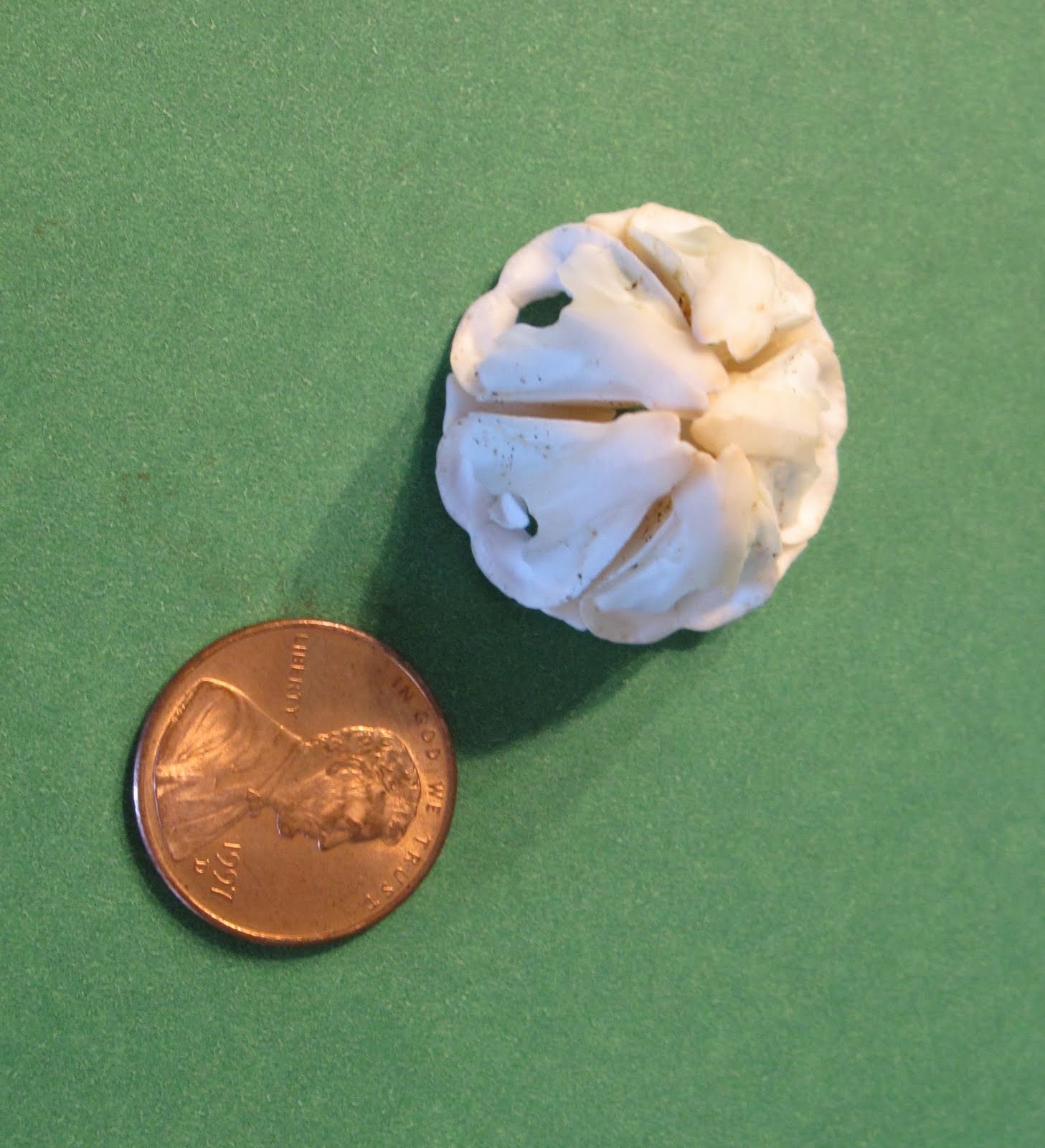
Quiz! What IS this?!

Hint: This object was found underwater and has to do with herbivory. The first person to get it right by posting in the comments will win one of the prizes we failed to give away at our Earth Day event at Kahekili!


P.S. if your answer is "a penny,' you are automatically disqualified!

Thursday, March 31, 2011

"Saturday Something Series" at Kahekili - CREEL Surveys


by Ka'anapali Makai Watch Coordinator Luna Kekoa
On Saturday March 26th, the Kahekili CREEL project hosted the monthly “Saturday Something Series” at Kahekili Beach Park.  This was a venue for the CREEL surveyors to share observations and lessons learned so far with the CREEL project, as well as the interactions that they have experienced with fishermen using the area.  Surveyors also shared their personal connection and experience with the ocean as well.  One participant who attended the event made a personal connection to the project, as he realized that his longtime fishing partner was the grandfather of one of the CREEL surveyors!
During the event we were also able to observe some fishing activity as well, as three spearfishermen equipped with full-camo wetsuits and spearguns geared up and headed for the water.   Though they returned with no catch it was still useful to know the type of gear, amount of time fishing, as well as the area they were diving.  These data can be used to calculate Catch per-unit effort of the area.  Catch per unit effort can be defined simply as a standard process to measure fishing “success” and can be used to evaluate the change in the amount of fish being harvested from the area.
The next event that the CREEL surveyors will participate in will be the Earth Day event at Kahekili held on Saturday April 23, 2011.  Surveyors will again share lessons with the CREEL project, but will also include demonstrations of fishing techniques such as ‘upena kiloi, hook tying, and weaving.  We hope to see you at the next event!


Thursday, March 10, 2011

County Council Addresses Phasing out of Injection Wells, Monday, March 14th, 9am

from Darla White:

Aloha Ocean Stewards,

Mark your calendars! There is an important public participation opportunity coming up on Monday morning concerning injection wells, and if you have the opportunity, please come out and give your comments and/or write them for the public record. As a member of the Maui community you truly have a voice, and I want to encourage you to participate.
The Maui County Council's Infrastructure Committee agenda, chaired by West Maui representative Elle Cochran, will focus on the infrastructure improvements needed to initiate the phasing out of the injection wells (http://www.co.maui.hi.us/archives/196/110314imagenda.pdf). Please see this link for details on submitting written testimony (it's short).  Public testimony is three minutes at the beginning of the session, which starts at 9am in Council Chambers on the top floor of the County Building in Wailuku.
The following announcement went out for a meeting held last week, but it is applicable to the meeting this coming Monday, March 14th. It was very short notice (I received it the afternoon before) and not well attended. This is our opportunity to give it our attention and our thoughts, in person or in writing. Resources and information are given below the announcement.
http://maui-tomorrow.org/?p=398
Posted on February 28, 2011 by Maui Tomorrow Council Committee to review improvements needed to initiate phasing out injection wells
For Immediate Release: February 25, 2011
Press Release by: Councilmember Elle Cochran, Chair Infrastructure Management Committee
WAILUKU, Hawaii - The Maui County Council's Infrastructure Management Committee will receive presentations from participants in the Department of Environmental Management's Wastewater Community Working Group and others, Monday, Feb. 28, (also March 14th) at 9:00 a.m. in the Council Chamber, Committee Chair Elle Cochran announced today. Councilmember Cochran emphasized that the meeting will focus primarily on water reuse infrastructure needs and potential infrastructure upgrades that will aid in the long-term goal of phasing out injection wells and encourage the reuse of this valuable resource. The injection well discussion will follow a presentation from Public Works Director David Goode regarding the organization of the Department of Public Works and the Department's current priorities. The Council has indicated support for a policy that moves the County away from reliance on injection wells. Cochran also noted that the Council's Water Resources Committee reviewed the "Central Maui Recycled Water Verification Study, 2010" earlier this month. "I look forward to engaging with the committee members to move beyond discussions and into an analysis of concrete infrastructure improvements needed to initiate phasing out the use of injection wells," Cochran said. "The task is challenging, but with our ability to work intensively on this matter, I am confident that we will be able to better engage with the Department of Environmental Management towards positive results." The meeting is open to the public. Meeting agendas are available on the Infrastructure Management Committee website. To receive meeting agendas via e-mail, please complete the on-line subscription form on the County website at www.mauicounty.gov. For more information, please contact the Infrastructure Management Committee staff. I have included some background materials to catch you up or refresh your memory (depending on where you are coming in on this important issue):
1) A scientific study by Meghan Dailer and Robin Knox (et al., 2010) –attached
2) USGS researcher Dr Chip Hunt also published a study and it can be found here: http://pubs.usgs.gov/sir/2009/5253/sir2009-5253.pdf (it's rather a large file due to maps and graphics).
3) Environment Hawaii feature story (May, 2010) – attached
4) And a really nice article by Rob Parsons can be found here: http://www.mauitime.com/Articles-i-2010-05-20-73389.113117-Wastewater-Injection-Wells-May-Be-Polluting-Our-Ocean.html.
5) Another well organized group and fantastic resource is the Dire Coalition – Don't inject, redirect! whose site can be found here: http://dontinject.org/?page_id=2
6) Testimony to the EPA at public hearings in 2008 and 2009 can be found online at: http://www.epa.gov/region9/water/groundwater/uic-permits.html
This is your island. Please be informed. Please ask questions. Please participate.
For fishable, swimmable waters.
Mahalo,
Darla
Darla J White
Special Projects Coordinator
Hawai`i Division of Aquatic Resources, Maui
130 Mahalani Street, Wailuku HI 96793
Eyes of the Reef
Climate Change, Marine Disease, & Invasive Species Local Action Strategy
Island Coordinator, Maui
www.reefcheckhawaii.org/eyesofthereef
Cell: 808-345-2312, Fax 888-570-2641
onareef@yahoo.com
darla.j.white@hawaii.gov